
How Real-Time Water Quality Data Powers Smarter, More Efficient Water Management

Water management has evolved beyond periodic testing and manual logs. Discover
how real-time monitoring transforms facility operations, cuts costs, and ensures
compliance.
The Critical Role of Water Quality Monitoring
Water plays a fundamental role across diverse industrial operations
from high-pressure boilers and cooling towers to reverse osmosis
plants and wastewater treatment systems. In these environments,
water quality isn’t just about meeting standards; it directly impacts
equipment longevity, energy consumption, operational efficiency,
and bottom-line costs.
However, managing water efficiently is no longer about relying on periodic testing schedules or handwritten logbooks. Traditional approaches create dangerous blind spots where problems can develop undetected for hours or even days. Modern industrial facilities require a more sophisticated approach that provides continuous visibility into water system performance.
Today, real-time water quality data is fundamentally transforming how facilities control costs, maintain regulatory compliance, and protect critical assets. This technological shift enables operations teams to move from reactive problem-solving to proactive system optimization.
This data-driven approach forms the foundation of HNW’s Smart Plant Program, where continuous monitoring and intelligent analytics drive measurable water efficiency improvements across all major industrial water systems.
However, managing water efficiently is no longer about relying on periodic testing schedules or handwritten logbooks. Traditional approaches create dangerous blind spots where problems can develop undetected for hours or even days. Modern industrial facilities require a more sophisticated approach that provides continuous visibility into water system performance.
Today, real-time water quality data is fundamentally transforming how facilities control costs, maintain regulatory compliance, and protect critical assets. This technological shift enables operations teams to move from reactive problem-solving to proactive system optimization.
This data-driven approach forms the foundation of HNW’s Smart Plant Program, where continuous monitoring and intelligent analytics drive measurable water efficiency improvements across all major industrial water systems.
Why Real-Time Water Quality Data Matters
Water chemistry in industrial systems is dynamic and can change dramatically within minutes. Understanding these rapid fluctuations is
critical to preventing costly problems before they impact operations.
Variable Raw Water Sources
Municipal supply variations, seasonal
groundwater changes, and source
switching create constant chemistry
shifts
Process Load Fluctuations
Production ramp-ups, shutdowns, and
load changes directly impact water
system demands and chemistry
Seasonal Shifts
Temperature swings, humidity changes,
and seasonal contaminants affect system
performance year-round
Equipment Aging
Membrane degradation, pump wear, and
heat exchanger fouling progressively alter
system behavior
Chemical Dosing Issues
Over-treatment wastes money and risks
scaling; under-treatment allows corrosion
and biological growth
Fouling Events
Scaling deposits, corrosion, and
biofouling can develop rapidly when
conditions shift unexpectedly
Relying solely on manual testing allows critical problems to remain hidden for hours or days, leading to increased chemical consumption,
unexpected fouling or scaling, energy losses, unplanned downtime, and compliance risks.
Real-time data provides continuous visibility, eliminating guesswork and enabling proactive decision-making that prevents problems before they escalate into costly failures.
Real-time data provides continuous visibility, eliminating guesswork and enabling proactive decision-making that prevents problems before they escalate into costly failures.
What Real-Time Monitoring Tracks Across Your Systems
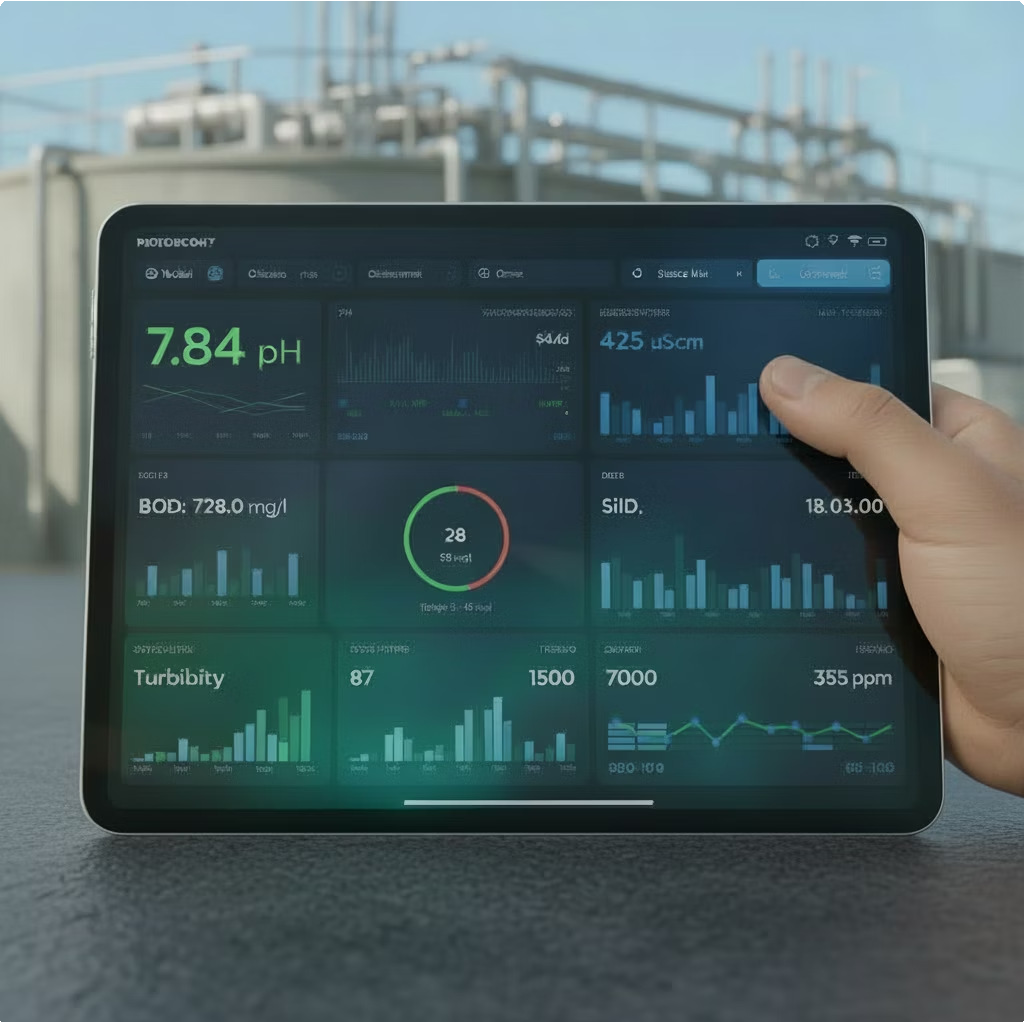
Different water systems require different parameters to be continuously tracked. Real-time monitoring provides the specific insights needed
for each critical application in your facility.
RO & Raw Water Systems
- Conductivity / TDS: Measures dissolved solids and membrane performanc
- pH levels: Critical for membrane life and chemical effectiveness
- Turbidity / SDI: Indicates particulate fouling potential
- Differential pressure: Early warning of membrane fouling
- Flow rates: Feed, permeate, and reject streams monitored continuously
- Recovery & salt rejection: Key performance indicators for system efficiency
Cooling Water Systems
- Conductivity: Tracks concentration and blowdown needs
- pH & alkalinity: Prevents corrosion and optimizes chemical programs
- Cycles of concentration: Maximizes water efficiency safely
- Microbial activity (ATP/ORP): Detects biological growth early
- Corrosion trends: Protects expensive heat exchange equipment
- Makeup and blowdown rates: Optimizes water and chemical usage
Boiler Water Systems
- TDS / conductivity: Controls blowdown and prevents carryover
- pH, M & P alkalinity: Maintains protective chemistry
- Sulfite residuals: Ensures oxygen scavenging effectiveness
- Feedwater oxygen levels: Prevents corrosion throughout the system
- Condensate pH and return %: Monitors contamination and efficiency
Wastewater (ETP/STP)
- DO, ORP: Tracks biological treatment effectiveness
- pH: Ensures optimal treatment conditions
- MLSS/MLVSS: Monitors biomass health and concentration
- COD/BOD trends: Tracks treatment performance over time
- Biological health indicators: Ensures stable, compliant discharge
From Reactive to Predictive: With this depth of continuous insight, plants no longer respond to problems after they occur they
anticipate and prevent them entirely
How Real-Time Data Improves Water Efficiency
Continuous monitoring transforms water management from a cost center into an optimization opportunity. Here are the five critical ways realtime data delivers measurable improvements.
Precision Chemical Dosing
Real-time data enables chemical dosing based on actual system demand rather than fixed schedules or guesswork. This intelligent
approach results in 10-30% reduction in chemical spend, more stable water chemistry, dramatically reduced risk of corrosion,
scaling, or microbial growth, and significantly lower operational variability across shifts and seasons.
Early Detection of Problems
Real-time trend analysis highlights developing issues before they escalate into failures. Rising differential pressure signals membrane
fouling in progress. Sudden TDS spikes indicate blowdown valve failures. Low sulfite readings reveal dangerous oxygen ingress in
boilers. ORP drops warn of microbial blooms. Early intervention prevents costly breakdowns and irreversible asset damage.
Optimized Blowdown & Water Reuse
Real-time conductivity control helps facilities reduce boiler blowdown losses, safely increase cooling tower cycles of concentration,
save substantial water and energy, and lower discharge volumes and chemical wastage. Plants implementing automated blowdown
control typically save 5-15% on water consumption and 8-12% on energy costs.
Easier Compliance & Traceability
Real-time monitoring systems automatically generate timestamped data logs, comprehensive trend graphs, instant deviation alerts,
and auto-generated compliance reports. This continuous documentation makes regulatory audits straightforward and ESG reporting
more transparent and credible to stakeholders.
Predictive Maintenance & Asset Life
With continuous performance data, facilities can accurately predict membrane cleaning schedules, dosing pump service cycles,
cooling tower biofilm risks, and boiler scaling tendencies. This shifts operations from expensive reactive maintenance to costeffective proactive asset management.
Real-World Impact: The Numbers That Matter
Real-time water quality monitoring delivers measurable improvements across every critical operational metric. These aren’t theoretical
benefits they’re documented results from industrial facilities worldwide.
0
-30%
Chemical Cost Reduction
Through precision dosing based on actual
demand
0
-15%
Water Savings
Via optimized cycles and controlled
blowdown
0
-12%
Energy Efficiency Gain
From cleaner heat transfer surfaces
0
-40%
Membrane Life Extension
Through early fouling detection and
intervention
0
%
Reduction in Unplanned Downtime
By catching problems before they cause
failures
0
%
Compliance Documentation
Continuous, automated audit trails
For modern industries operating in competitive markets with tight margins, these improvements aren’t just beneficial they’re becoming
essential for maintaining operational excellence and meeting sustainability commitments.
Turning Data Into Action: The HNW Smart Plant Approach
Beyond Monitoring: Intelligence
Data collection alone doesn’t improve operations. The real value comes from converting raw data into
actionable intelligence that guides daily decisions and long-term strategy.
HNW’s Smart Plant Program transforms continuous monitoring into operational excellence through integrated technology and expert support.
HNW’s Smart Plant Program transforms continuous monitoring into operational excellence through integrated technology and expert support.
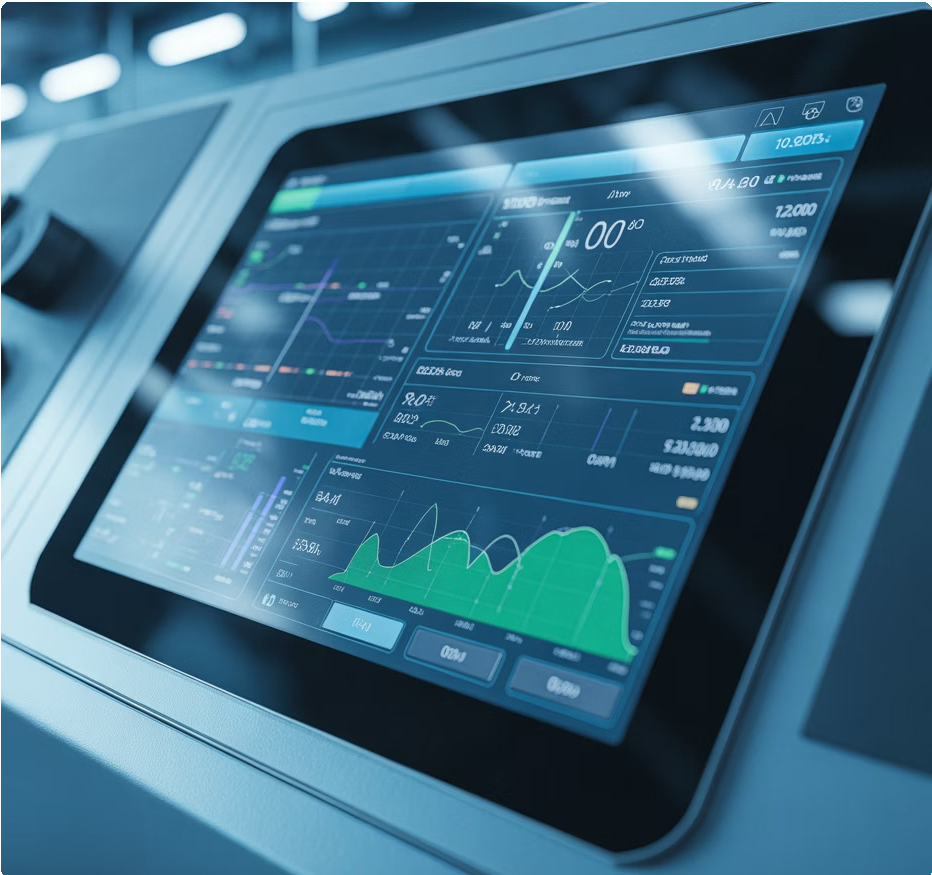
Smart Plant Dashboard
- Live water parameter tracking across all systems
- AI-led optimization recommendations based on patterns
- Digital logs for audits with complete traceability
- Chemical usage analytics showing cost trends
- Site performance benchmarking across locations
- Automated alerts for parameter deviations
Hybrid Service Model
Real-time insights are continuously supported by experienced onground expertise:
- Scheduled field service visits by certified technicians
- Manual cross-checks validating sensor accuracy
- Root-cause diagnosis when issues arise
- Custom optimization plans for your specific operations
This ensures your system is not only monitored 24/7 but
continuously improved through the combination of technology
and human expertise.
The Complete Benefit Picture for Your Facility
Facilities implementing real-time water quality data with HNW’s Smart Plant Program consistently achieve measurable improvements across
operational, financial, and sustainability metrics.
Financial Performance
- Lower chemical usage through demand-based dosing
- Reduced water consumption via optimized cycles
- Lower energy costs due to cleaner heat transfer surfaces
- Decreased maintenance expenses from preventive approach
Asset Protection
- Longer membrane life from early fouling detection
- Extended heat exchanger and tube longevity
- Reduced pump wear through stable chemistry
- Protected infrastructure from corrosion damage
Operational Reliability
- Fewer breakdowns due to early warning alerts
- More predictable performance across shifts
- Reduced emergency callouts and crisis management
- Consistent operations across multi-site facilities
Compliance & Sustainability
- Better compliance visibility with automated logging
- Simplified audit preparation and documentation
- Credible ESG reporting with verified data
- Reduced environmental footprint from efficiency gains
“For modern industries facing increasing pressure on costs, compliance, and sustainability, real-time water quality monitoring is not an
upgrade it is a competitive necessity.”
Making the Transition to Data-Driven Water Management
Implementation is Straightforward
Moving to real-time monitoring doesn’t require a complete system overhaul. HNW’s Smart Plant
Program integrates seamlessly with your existing water treatment infrastructure.
The implementation process typically includes strategic sensor placement at critical monitoring points, integration with your existing control systems, dashboard configuration tailored to your operations, team training on the new tools and workflows, and baseline establishment for benchmarking improvements.
Most facilities achieve full operational status within 2-4 weeks, with measurable improvements visible within the first few month of operation.
The implementation process typically includes strategic sensor placement at critical monitoring points, integration with your existing control systems, dashboard configuration tailored to your operations, team training on the new tools and workflows, and baseline establishment for benchmarking improvements.
Most facilities achieve full operational status within 2-4 weeks, with measurable improvements visible within the first few month of operation.
Who Benefits Most?
Manufacturing Plants
Facilities with boilers, cooling towers, and process water systems that demand consistent quality and maximum uptime
Power Generation
Plants requiring precise water chemistry control to protect high-value assets and maintain generation capacity
Pharmaceutical & Food
Operations where water quality directly impacts product quality and regulatory compliance is critical
Chemical Processing
Facilities with complex water systems where chemistry variations can impact process efficiency and safety
The Future of Water Management is Here
The future of industrial water management is data-driven, intelligent, and proactive. Real-time water quality data allows forward-thinking
facilities to operate at peak efficiency while reducing operational costs, maintaining sustainable water practices, protecting critical assets
worth millions, and achieving complete operational visibility across all water systems.
Traditional Approach
Manual testing, periodic logs, reactive
problem-solving, and hidden
inefficiencies
Current Reality
Real-time monitoring, continuous data,
early warnings, and measurable
improvements
Smart Plant Future
Predictive AI, automated optimization,
zero unplanned downtime, and maximum
efficiency
Ready to Transform Your Water Management?
With HNW’s Smart Plant Program, your water systems are no longer managed by guesswork,
periodic checks, or reactive crisis management. Instead, they are powered by continuous
intelligence that optimizes performance 24/7.
Join leading industrial facilities worldwide that have already made the transition to data-driven water management and are reaping the measurable benefits of continuous optimization.
The technology is proven. The benefits are measurable. The time to act is now.
Join leading industrial facilities worldwide that have already made the transition to data-driven water management and are reaping the measurable benefits of continuous optimization.
The technology is proven. The benefits are measurable. The time to act is now.
Share:
