

Restaurant Food Safety & Hygiene Best Practices: A Complete 2025 Checklist for Every Kitchen
Food safety is no longer just a compliance requirement, it is a business advantage, a customer expectation, and a brand differentiator that
sets successful operations apart from the rest.
Why Food Safety Matters More Than Ever
Every day, millions of meals are prepared in commercial
kitchens across India, many under intense time pressure,
high order volume, and heavy staff rotation. This fastpaced environment makes food safety a live, daily
practice that requires constant vigilance, not just a audit
checklist that sits on a shelf gathering dust.
In today’s hyperconnected world, one incident of contamination can spread faster than the food itself, reaching social media and review sites within minutes and potentially devastating a brand that took years to build.
In today’s hyperconnected world, one incident of contamination can spread faster than the food itself, reaching social media and review sites within minutes and potentially devastating a brand that took years to build.
Customer Illnesses
Foodborne illness incidents can
affect dozens or even hundreds of
patrons
Brand Reputation Damage
Social media amplifies negative
experiences instantly across
thousands
Compliance Penalties
Regulatory fines and potential
closure during investigations
Higher Operational Costs
Increased insurance premiums and
emergency response expenses
Loss of Customer Trust
Recovery can take months or years,
with some businesses never
recovering
Strong hygiene culture = fewer risks + higher brand reliability + better customer retention. The math is simple: prevention costs pennies,
while incidents cost thousands
The 5 Pillars of Food Safety Excellence
Success in food service requires mastering five interconnected pillars that work together to create a comprehensive safety system. Each pillar supports
the others, and weakness in any area compromises the entire operation. These principles, inspired by WHO guidelines and adapted for modern
commercial kitchens, provide a framework that works for establishments of any size.
Keep Clean
Hygiene starts with people and surfaces
Separate
Prevent cross-contamination at every step
Cook Thoroughly
Temperature equals safety, always
Safe Temperatures
Control the danger zone rigorously
Source Safely
Trust but verify your supply chain
Pillar 1: Keep Clean - Hygiene Starts With People
Hands, tools, and surfaces are the biggest carriers of contamination in any
commercial kitchen. While chemicals and sanitizers play an important role,
they’re useless without proper technique and consistent habits. A clean kitchen
is built by people following protocols, not by cleaning products alone sitting on
shelves.
Non-negotiable Cleaning Routines:
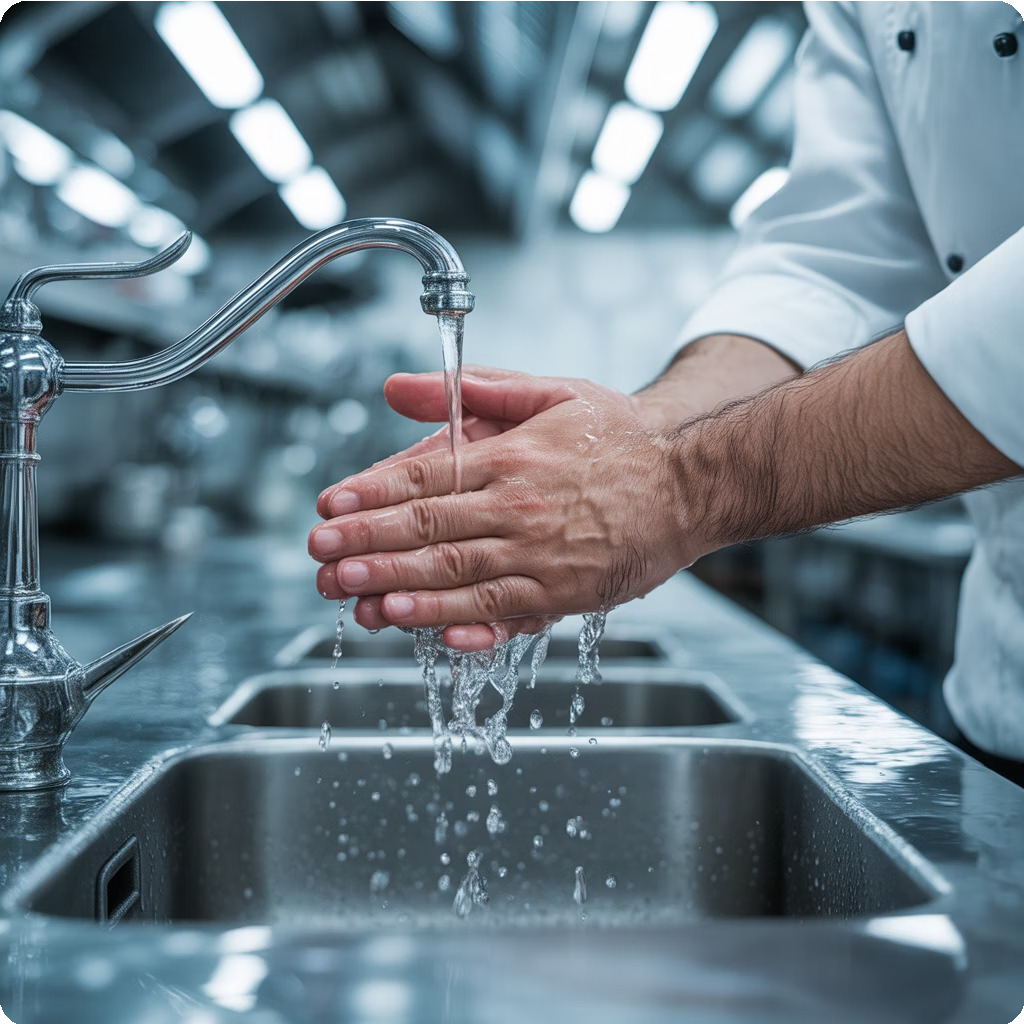
- Wash hands frequently, every 20 - 30 minutes or between task changes
- Follow proper handwashing technique using the full 20-second rule with soap
- Use color-coded cleaning tools to prevent cross-contamination
- Sanitize all worktops and contact surfaces frequently throughout service
- Maintain strict personal hygiene standards including hairnets, no jewelry, and trimmed nails
“A clean kitchen is built by habits, not by chemicals alone.”
Pillar 2: Separate - Prevent Cross-Contamination
In QSR and cloud kitchen setups, rapid task switching and high-volume production significantly increase the risk of cross-contamination. Raw proteins
touching ready-to-eat ingredients, using the same cutting board for vegetables and meat, or inadequate container sealing can turn a safe kitchen into a
health hazard within seconds. Cross-contamination is invisible to the naked eye, which makes prevention not just important but absolutely critical to
every operation.
Separate Raw & Cooked
Never allow raw proteins to
contact cooked or ready-to-eat
foods at any stage
Color-Coded Boards
Use different colored chopping
boards for different food types
as standard practice
Sealed Containers
Store all food in properly
sealed, clearly labeled
containers with dates
Allergen Segregation
Keep allergens strictly
segregated with dedicated
tools and storage areas
Critical reminder: Never reuse marinade or brine that has contacted raw proteins. Cross-contamination is invisible prevention must be
intentional and consistent.
Pillar 3: Cook Thoroughly - Temperature = Safety
Most dangerous pathogens including Salmonella, E. coli, and Listeria die
only at specific internal temperatures. Visual inspection is never enough,
meat can look fully cooked while harboring dangerous bacteria in cooler
internal areas. This is especially critical for cloud kitchens where food
must maintain safety during transportation and reheating.
“If it’s not cooked right, it’s not safe, even if it looks perfectly done.”
Invest in quality instant-read thermometers and train every cook to use
them correctly. Temperature verification should be as automatic as
seasoning.
Poultry
74°C (165°F) internal
temperature minimum
Seafood
63°C (145°F) and opaque
throughout
Reheated Foods
>75°C (167°F) throughout
before serving
Hot Holding
>60°C (140°F) continuously
during service
Pillar 4: Keep Food at Safe Temperatures
The “Danger Zone” between 5°C and 60°C (41°F to 140°F) is where bacteria multiply exponentially, doubling in number every 20 minutes under ideal
conditions. Food kept in this temperature range for more than 2 hours becomes unsafe for consumption, regardless of how fresh it was initially or how
good it looks. Temperature control is the absolute heart of food safety, it’s the invisible barrier between safe meals and foodborne illness outbreaks.
Receiving
Check temperatures
immediately upon
delivery and reject any
items in danger zone
Storage
Maintain refrigeration
below 5°C and freezers
at -18°C or colder
continuously
Preparation
Minimize time
ingredients spend at
room temperature
during prep work
Cooking
Reach safe internal temperatures verified
with calibrated
thermometers
Holding
Keep hot foods hot
(>60°C) and cold foods
cold (<5°C) during
service
Essential Temperature Control Checklist:
Chill cooked foods quickly using shallow
pans or ice baths to reduce time in danger
zone
Maintain strict cold chain for all dairy
products, meat, seafood, and prepared
sauces
Store ready-to-eat items below 5°C at all
times with regular monitoring
Use properly calibrated thermometers and verify accuracy monthly
Never thaw frozen food at room temperature use refrigeration or
cold running water only
Pillar 5: Source Safe Ingredients - Trust the Supply Chain
Food safety begins long before ingredients enter your kitchen. A contaminated ingredient can compromise every dish you prepare, regardless of how
carefully you handle it afterward. Your reputation depends not just on your own practices but on the integrity of every supplier in your chain. Due
diligence in supplier selection and ongoing verification isn’t bureaucracy it’s essential protection for your business and customers.
Supplier Requirements:
- Valid FSSAI licenses and current certification documentation
- Batch-wise Certificates of Analysis (COAs) for traceability
- Clear freshness dates, expiry information, and proper storage instructions
- Documented proper transport hygiene and temperature control protocols
- Regular third-party food safety audits and inspection records
Inventory Management Systems:
- Implement a First-Expired-First-Out (FEFO) system rather than traditional FIFO for perishable items. This ensures products closest to expiration are used first, regardless of when they arrived. For nonperishables, maintain First-In-First-Out (FIFO) rotation.
- Conduct daily receiving inspections checking for packaging integrity, temperature compliance, and signs of pest activity or contamination.
Building a Hygiene Culture in Modern Food Businesses
A checklist hanging on the wall cannot replace a living, breathing culture of food safety. True food safety excellence comes from creating an
organizational mindset where every team member, from the newest prep cook to the franchise owner, understands their critical role in protecting
customers. Culture transforms compliance from a burden into a point of pride.
Daily Toolbox Meetings
Brief 5-10 minute huddles each shift to reinforce key safety practices and
address specific day’s challenges
Monthly Refresher Training
Structured hygiene training sessions with hands-on demonstrations and
competency verification
Clear Visual SOPs
Laminated standard operating procedures posted at every station with
photos and simple language
Internal Audits
Regular inspections using digital scoring systems that track trends and
improvement areas
Staff Recognition
Celebrate and reward team members who consistently demonstrate
excellent food safety practices
Open Communication
Create channels where staff can report concerns without fear and suggest
safety improvements
Remember: Food safety is everyone’s responsibility, from the prep cook chopping vegetables to the franchise owner reviewing reports. Culture
change happens when leadership demonstrates that safety is never compromised for speed or cost.
Clean Kitchens Build Stronger Brands
Food safety is a silent promise every restaurant makes, and one
the customer trusts blindly every single time they take a bite.
Whether you operate a high-volume QSR with hundreds of daily
transactions, a cloud kitchen delivering across an entire
metropolitan area, a fine dining establishment with premium
expectations, or a neighborhood café with a small dedicated
team, food safety is the foundation of your reputation and future
success.
Adopting WHO-inspired food safety principles ensures safer
meals that protect your customers, healthier communities that
thrive together, and stronger businesses built on trust and
reliability.
“In food service, good hygiene is simply good business.”
Food Safety Protects Everyone:
Your Customers
Protecting diners from preventable foodborne illness and ensuring
every meal is safe
Your Team
Protecting kitchen staff from workplace hazards and creating a
professional environment
Your Business
Protecting operations from costly downtime, penalties, and
emergency closures
Your Brand
Protecting reputation from irreversible damage that can destroy years
of hard work
Share:
