


The Franchise Hygiene Problem Nobody Talks About
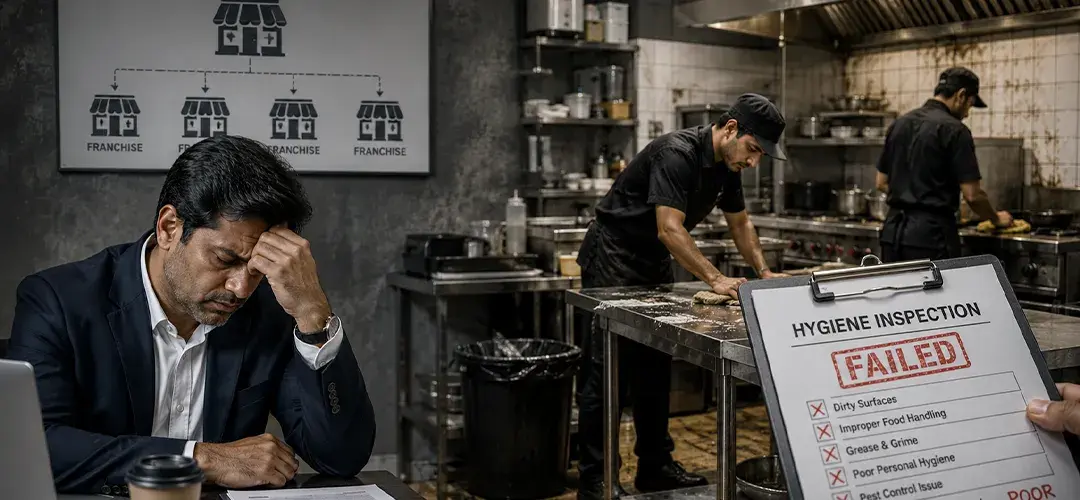
When a franchisee’s kitchen fails a hygiene inspection, it is not their name on the
door that takes the hit. It is yours.
India's Franchise Food Sector: Scale at Speed
India’s food service franchise sector has expanded at a pace that few other
markets can match. From global QSR giants with thousands of franchiseoperated outlets to homegrown casual dining brands scaling into Tier 2 and
Tier 3 cities, the franchise model has been central to the organised food
sector’s growth story.
Franchising allows brands to scale faster than company-owned expansion permits. It distributes capital requirements, leverages local market knowledge, and for a brand building national presence quickly, it is often the only viable path.
But franchising creates a structural challenge that is unique, significant, and
consistently underestimated: it separates brand ownership from kitchen
control.
Franchising allows brands to scale faster than company-owned expansion permits. It distributes capital requirements, leverages local market knowledge, and for a brand building national presence quickly, it is often the only viable path.
Why Brands Choose Franchising
Faster Scale
Expand beyond
company-owned
limits
Distributed Capital
Franchisee bears
operational
investment
Local Knowledge
Operator relationships in every market
Brand Risk Without Operational Control
In a company-owned restaurant, the relationship between hygiene standards and brand risk is direct. The brand owns the kitchen, employs the
staff, and controls the environment. In a franchised outlet, this relationship is fundamentally different.
Company-Owned Kitchen
Brand owns the kitchen, employs staff,
manages supply chain. Full visibility to
detect and authority to correct hygiene
failures.
Franchised Outlet
Franchisee owns the operation and
employs staff. Franchisor sets standards
and audits periodically — but is not present
in the kitchen.
Where Risk Falls
A food safety incident hits the brand’s
name, reputation, and customer
relationships. The brand absorbs the
systemic damage.
The entity that carries the most brand risk from a hygiene failure is not the entity with daily operational control over whether that
failure occurs.
Why Hygiene Standards Drift in Franchise Environments
Standard drift — the gradual erosion of hygiene execution from defined SOP standards — happens in company-owned kitchens too. But it
happens differently, and more severely, in franchise environments.
Four Forces Behind Franchise Standard Drift

Independent Operational Culture
Franchise owners develop their own rhythms influenced by local
preferences, staffing patterns, and cost pressures — causing hygiene
culture to diverge from brand standards over time.

Training Consistency Gaps
Franchisees train their own staff. Six months after onboarding, new
kitchen hires often receive a much less thorough version of the
original brand training — without brand trainers present.

Financial Pressure on Hygiene
When margins tighten, hygiene investments — cleaning products,
equipment maintenance, training time — are quietly reduced. These
accumulate into meaningful standard degradation.

Distance from Accountability
Accountability in franchise networks runs through a franchise
agreement, not direct employment. Franchisors cannot direct a
franchise owner’s staff the way they can direct employees.
The Visibility Gap: What Franchisors Cannot See
The most dangerous aspect of the franchise hygiene problem is not
that standards slip — it is that they slip invisibly. A franchisor relying
on quarterly or biannual audit visits has, at best, a picture of hygiene
performance for a small fraction of total operating time.
Formal compliance visits are usually scheduled in advance. The
kitchen receives special preparation. The assessment captures a
curated version of hygiene standards — not the typical operational
reality. The compliance score may bear limited resemblance to what
the kitchen looks like on the other 180 days of the year.
For a brand with 80 franchise outlets across multiple cities,
somewhere in that network, right now, there are kitchens drifting
from standard. The question is not whether — it is how far, and
whether the brand will find out before or after something goes
wrong.
0
Days Between Audits
Typical gap in a biannual audit
model — largely invisible to the
franchisor
0
+
Franchise Outlets
Each a separate visibility gap
compounding brand risk across
the network
What a Well-Governed Franchise Hygiene Model Looks Like
The most sophisticated franchise operations in India’s food sector are moving beyond the periodic audit model toward something more
continuous and structural — building genuine operational visibility into the franchise relationship.
Clear, Auditable Standards
Defined, measurable hygiene
parameters consistently
assessed across all franchise
locations — a common
standard for every outlet.
Frequent Structured Assessments
Regular evaluations with
image-based evidence
capture, providing a genuine
picture of daily operational
standards — not just preaudit performance.
Centralised Franchise Dashboard
Real-time visibility into
hygiene performance across
all franchise locations,
enabling proactive
identification of slipping
standards.
Performance-Linked Training
Targeted training
interventions driven by
actual assessment data — not
a generic annual calendar.
Reframing the Franchise Relationship
Franchise management teams often ask: will franchisees push back against greater
oversight? In practice, the answer depends significantly on how it is framed.
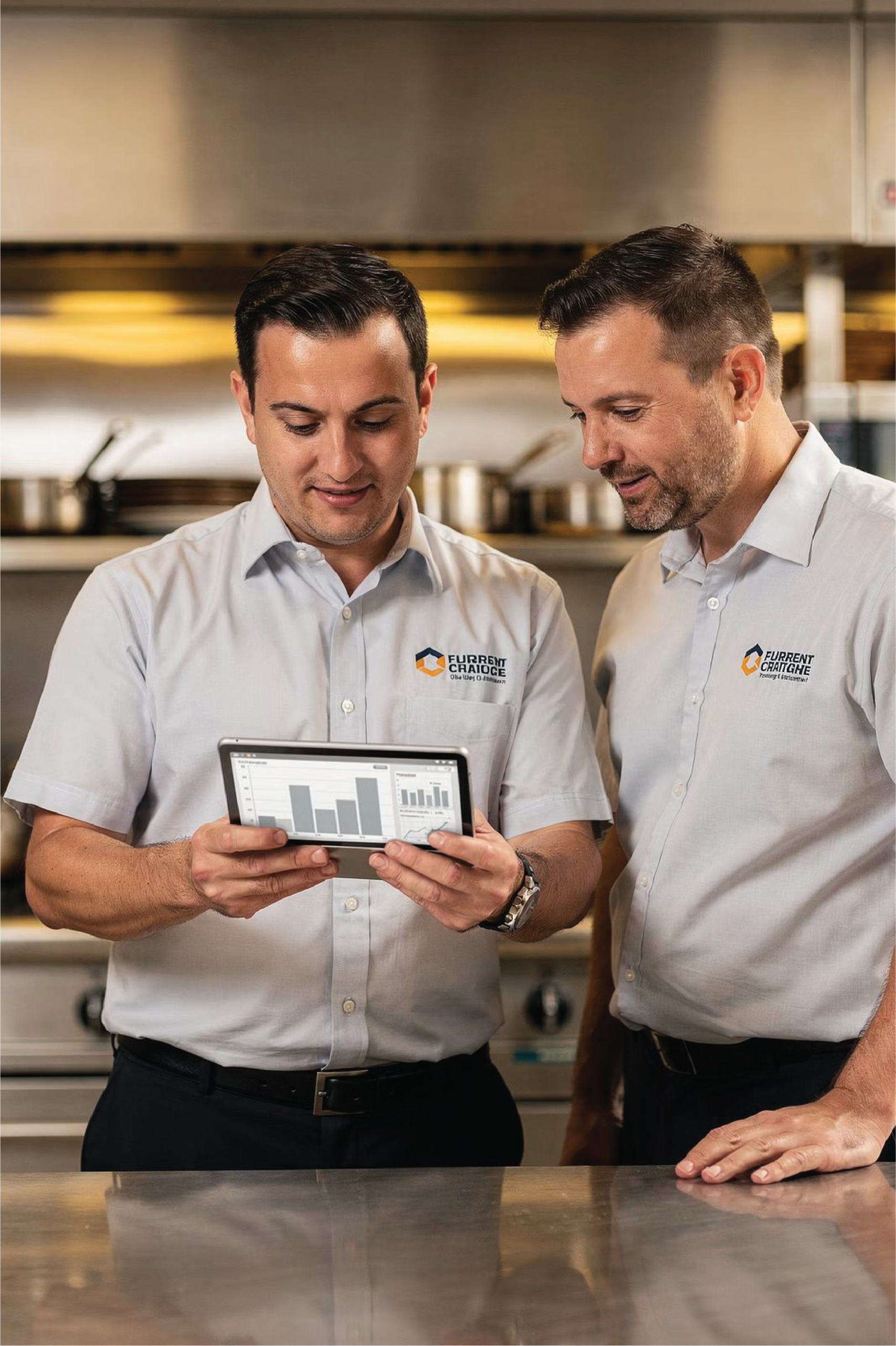
Surveillance vs. Support: How Framing Changes Everything
Positioned as Surveillance
A mechanism for catching franchisees doing something wrong.
This framing generates resistance and damages the franchise
relationship.
Positioned as Operational Support
A system giving franchise owners better visibility into their own
kitchen’s performance, helping them manage staff more
effectively and protect their brand investment.
A franchise owner with a real-time hygiene dashboard has a tool that helps them manage better. One who receives targeted training when gaps
are identified is getting operational value. One who demonstrates strong hygiene performance to regulators and consumers is protected — as
much as the brand is.
The most effective franchise hygiene governance models are not adversarial. They are collaborative — built on the recognition that
both parties have a fundamental interest in the kitchen meeting its standards.
Real-Time Visibility Across Your Entire Outlet Network
HygieneIQ gives franchise brands real-time visibility into hygiene performance across their entire outlet network — company-owned and
franchised alike. Structured assessments, centralised dashboards, and performance-linked training ensure that brand standards are not just
defined, but consistently visible and consistently delivered.

Centralised Dashboards

Structured Assessments

Performance-Linked Training
Share:
