• Home
  • Hygiene
  • Water
  • Sustainability
  • Hygiene IQ

Hygiene IQ

What FSSAI’s Hygiene Rating Scheme Actually Means for Your Restaurant

A hygiene rating on your door is not just a certificate. It is a live signal to consumers, inspectors, and your own leadership about what is actually happening in your kitchen every single day

The Smarter Operators Are Treating It as a Mirror

The Common Mindset

Most restaurant operators treat the Hygiene Rating Scheme the way they treat an annual tax filing — something you prepare for, submit, and set aside until next year.

Why ThatIs a Problem

India’s food safety regulatory landscape has been shifting systematically — not slowly. FSSAI has been building out enforcement infrastructure, standardising rating systems, expanding inspection capacity, and creating greater public accountability across the country

For restaurant chains with multiple locations, growing consumer scrutiny, and complex operational environments, the old mindset represents a material and growing risk.

What the FSSAI Hygiene Rating Scheme Actually Measures

Ratings are assigned on a five-star scale, based on structured inspections covering a defined set of hygiene parameters across licensed food businesses.
Asset 6@2x

Personal Hygiene

Health practices of food handlers
Asset 5@2x

Sanitation

Food contact surfaces and equipment
Asset 4@2x

Pest Control

Measures and evidence of pest activity
Asset 3@2x

Food Storage

Temperature management and segregation
Asset 2@2x

Water Quality

Water supply standards
Asset 1@2x

Documentation

Record-keeping practices

The Rating You Have vs. The Kitchen You Are Running

The hygiene rating a restaurant earns at the point of inspection reflects that kitchen’s performance on the day of the inspection — not what the kitchen looks like on a typical Tuesday afternoon, or during the 8pm dinner rush.

What an Inspector Can Do

Spend two to three hours in a kitchen and produce an accurate picture of what that kitchen looks like during those two to three hours.

What an Inspector Cannot Do

Validate what has been happening in the other 16 to 18 hours of each day, across the 90 to 180 days since the last inspection.
For a chain with 50 or 100 outlets, some of which last received a formal hygiene assessment six months ago, the cumulative version of this gap is significant.

India's Enforcement Landscape Is Changing — Fast

The traditional model of predictable, pre-announced, calendar-driven inspections is giving way to something more dynamic. Several specific shifts are worth understanding.

Complaint-Triggered Inspections

A single customer complaint, a negative online review, or a social media post about kitchen conditions can trigger a regulatory visit — entirely outside your scheduled audit cycle.

Social Media as an Inspection Trigger

Inspectors and food safety authorities monitor public complaints. Viral food safety content — poor kitchen condition videos, mass food poisoning reports — routinely results in unannounced visits.

Intensifying State-Level Enforcement

Enforcement intensity varies by state, but the overall trend across Maharashtra, Karnataka, Tamil Nadu, Delhi, and Telangana has been toward more active enforcement.

Third-Party Ratings on Delivery Platforms

Hygiene information integrated into food delivery platforms means a poor rating is no longer just a regulatory concern — it is a commercial one, visible to every consumer choosing where to order

The Uncomfortable Operational Implication

Preparing for a scheduled inspection is no longer an adequate compliance strategy.

The inspection might come at any time — triggered by a complaint you did not see coming, in a location you were not planning to prioritise this quarter. The organisation that understands this is the one that stops preparing for inspections and starts simply being ready.

What'Continuous Audit Readiness' Actually Means

Continuous audit readiness means the organisation maintains its hygiene standards — and evidence of those standards — at a level that would satisfy an inspection visit on any given day, without requiring preparation or a pre-inspection push.

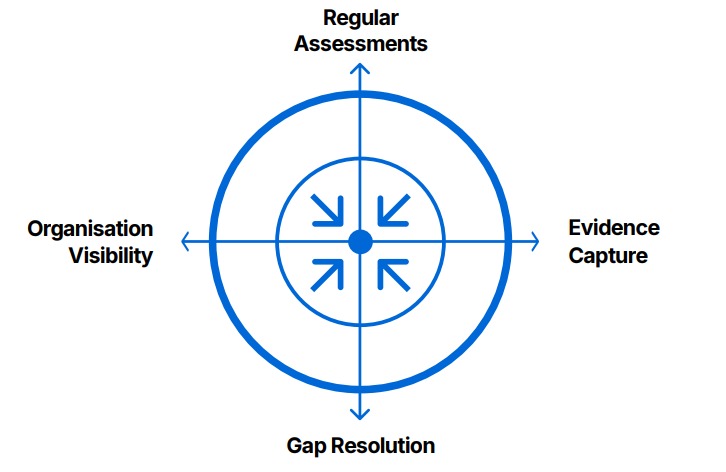
Building the Infrastructure: Four Things That Must Be True

Assessments Happen Regularly

Daily or weekly structured assessments replace periodic formal inspections as the primary mechanism — creating a continuous record, not an occasional snapshot.

Evidence Is Captured Systematically

Every assessment is supported by timestamped records, imagebased documentation, and geo-tagged data — producible immediately during any inspection visit.

Gaps Are Addressed Before They Accumulate

Recurring hygiene failures identified through regular monitoring are resolved through targeted corrective action and training before they become systemic problems.

Performance Is Visible Across the Organisation

Operations leadership can see hygiene performance across all locations in real time — enabling proactive support for high-risk outlets before a regulator finds them.

The Opportunity the Scheme Actually Represents

The FSSAI Hygiene Rating Scheme is also a genuine opportunity for differentiation. Consumers in India’s organised food sector are more informed and more safety-conscious than ever before. A visible, credible hygiene rating is increasingly meaningful to the customer deciding between two options on a delivery platform or walking past two outlets in the same mall.

Brands That Benefit Less

Those that achieve a high rating once and display it — without maintaining the daily standards that rating was meant to reflect.

Brands That Benefit Most

Those that maintain genuinely high hygiene standards consistently — such that the rating is an accurate reflection of daily operational reality, not a snapshot of exceptional preparation.
In a market where trust is hard to build and easy to lose, the confidence to display your hygiene rating knowing it means the same thing today as it did on inspection day is worth something significant.

How HygieneIQ Helps You Stay Inspection-Ready Every Day

HygieneIQ helps food service organisations build continuous audit readiness across all locations — so the rating on your door is always an honest reflection of your kitchen.

Structured Daily Assessments

Systematic hygiene checks across all critical parameters, every day, at every location.

AI-Assisted Compliance Scoring

Intelligent scoring that identifies risk patterns and flags issues before they escalate.

Centralised Performance Dashboards

Real-time visibility across all outlets so leadership can act proactively, not reactively.

Digital Evidence Capture

Timestamped, geo-tagged, image-based records ready to produce at any inspection visit.
Published by HygieneIQ | Enterprise Food Safety Intelligence
Share:
Scroll to Top