


Why India’s QSR Boom Is Outpacing Its Food Safety Infrastructure — And What Operators Must Do Now
The gap between expansion and operational control is becoming one of the most important — and least discussed — risks in India’s food service industry.
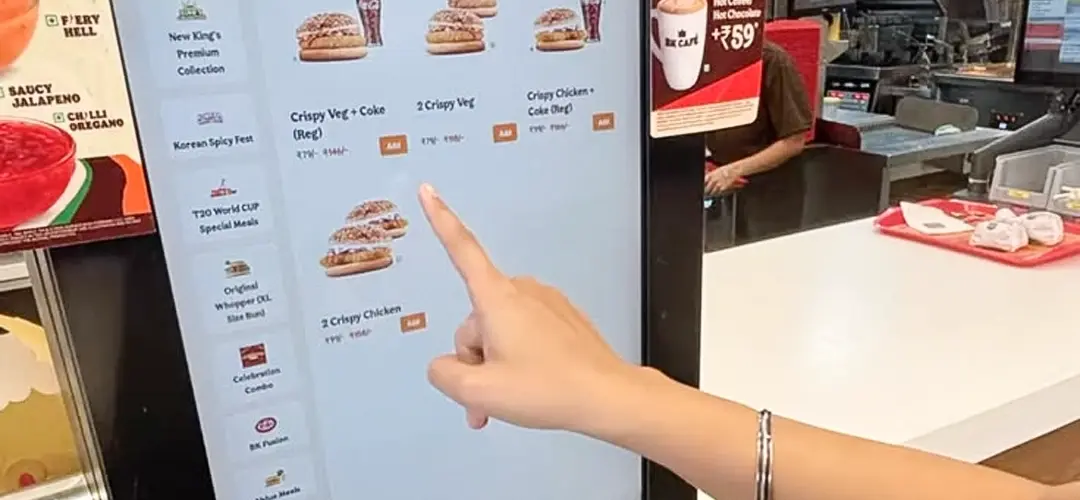
A Sector Growing at Breakneck Speed
India’s food service market is in the middle of a historic expansion. According to the National Restaurant Association of India (NRAI), the sector is expected to reach ₹7.76 lakh crore by 2028, driven by rising disposable incomes, rapid urbanisation, and the spread of organised food brands across the country.
Quick Service Restaurants (QSRs), cloud kitchen networks, and franchise-led brands are leading this growth. Markets that barely featured on the organised food map a decade ago — cities like Raipur, Coimbatore, and Guwahati — are now seeing branded restaurant chains expanding aggressively.
For operators, the opportunity is enormous.
But scaling restaurant networks is not just about opening more stores. It’s about maintaining consistent operational standards across every kitchen, every shift, and every employee interaction. And that’s where the real challenge begins.
Scaling Locations Is Easy. Scaling Standards Is Not.
Every new outlet introduces new variables:
- More staff to recruit and train
- More kitchens operating independently
- More suppliers and processes to manage
- More opportunities for operational drift
Maintaining food safety standards across one or two locations is manageable. Maintaining those same standards across dozens or hundreds of outlets is a completely different challenge.
India’s regulator, the Food Safety and Standards Authority of India (FSSAI), has taken several steps to strengthen enforcement — from expanding inspection frameworks to introducing the Hygiene Rating Scheme and tightening licensing norms.
However, regulation alone cannot solve the operational challenges that restaurants face daily across a country as large and diverse as India.
And on the ground, operators are encountering several structural issues.
The Operational Reality Inside Restaurant Chains
High workforce turnover
Compliance that is event-driven
Manual monitoring systems
Franchise complexity
Franchise and regional outlets often operate with a degree of independence, making it harder to enforce uniform hygiene standards across the network.
Individually, these issues may seem manageable. But when combined across dozens or hundreds of locations, they create significant blind spots for operations leaders.
Growth Without Visibility Creates Risk
Consider a typical growth trajectory for a mid-sized QSR brand.
A company expands from 30 outlets to 120 outlets in four years — a scenario that is increasingly common in India’s restaurant sector.
At 30 outlets, operations heads can still maintain direct oversight. Regional managers visit stores frequently, and issues are spotted early.
At 120 outlets across multiple states, that approach simply stops working.
Regional managers become stretched. Audit cycles lengthen. The time between a hygiene issue emerging and someone identifying it increases dramatically.
And in food service, even small delays in detection can lead to serious consequences — from customer complaints and regulatory action to long-term brand damage.
The faster a restaurant network grows, the harder it becomes to maintain visibility at the store level — unless systems are in place to provide it.
The Hidden Impact of Workforce Attrition
Among all operational challenges, workforce attrition may be the most underestimated risk to food safety standards.
Most organisations treat attrition primarily as an HR concern — focusing on recruitment pipelines, retention initiatives, and engagement programs.
But the operational impact runs much deeper.
When experienced employees leave, they take with them an understanding of hygiene procedures built through training and daily practice. Replacement staff are often onboarded quickly under operational pressure, and while they may receive basic training, they rarely develop the same depth of understanding immediately.
Over time, this leads to a gradual erosion of standards.
Cleaning procedures become slightly less thorough. Temperature monitoring routines are followed less consistently. Small shortcuts start becoming normalised.
These shifts rarely appear dramatically in a single audit. Instead, they accumulate quietly across kitchens, gradually widening the gap between documented SOPs and actual execution.
Traditional training programs alone cannot address this problem. Without real insight into what is happening at store level, training efforts remain generic and poorly targeted.
A Regulatory Environment That Is Becoming More Demanding
At the same time, the regulatory landscape around food safety in India is evolving.
The FSSAI is increasing inspection frequency, expanding its compliance infrastructure, and creating greater public transparency around hygiene ratings.
Inspections are no longer limited to predictable annual checks. They may now be triggered by consumer complaints, social media incidents, or enforcement drives.
For restaurant operators, this means one thing: audit readiness must become continuous.
Being prepared only in the weeks before an inspection is no longer sufficient. Organisations must maintain documented evidence of hygiene practices across locations — with verifiable records that demonstrate consistent compliance.
The Shift Restaurant Operators Need to Make
Simply adding more inspectors or increasing the number of audits will not solve the problem.
The model itself needs to evolve.
Leading food service organisations globally — and increasingly in India — are moving away from periodic inspection-driven compliance toward continuous operational intelligence.
The idea is simple: instead of reviewing hygiene performance occasionally, operators should be able to monitor it continuously across all locations.
This shift requires three fundamental changes.
1. From Inspections to Continuous Monitoring
2. From Reporting to Operational Intelligence
Raw compliance data is useful only when it becomes actionable insight. Identifying recurring gaps, high-risk locations, and process failures allows leaders to intervene early rather than reacting after problems escalate.
3. From Generic Training to Targeted Capability Development
Training becomes far more effective when it is linked directly to operational data. If a particular location repeatedly struggles with cold-chain management or surface sanitation, training can be focused precisely on those areas rather than delivered as a blanket program.
What This Means for Restaurant Leaders
For an operations head managing 80 outlets across multiple states, operational intelligence means starting the day with a clear view of which stores are performing well and which require attention — without waiting for weekly reports.
For quality and compliance leaders, it means entering regulatory inspections with time-stamped, geo-tagged digital records that clearly demonstrate ongoing hygiene practices.
For franchise management teams, it means benchmarking performance across locations and identifying where additional support or intervention is required.
Turning the Gap Into an Opportunity
India’s restaurant industry will continue expanding rapidly in the coming years. The opportunity for growth remains immense.
But long-term success will belong to organisations that recognise a simple reality: in food service, brand reputation is built — or lost — at the level of individual kitchens and daily operational behaviour.
The gap between industry growth and food safety infrastructure is a risk. But it is also an opportunity for operators willing to invest in stronger operational visibility and smarter systems.
Those who build continuous intelligence into their hygiene operations today will not only reduce regulatory exposure. They will create the operational foundation needed to scale confidently and sustainably.
HygieneIQ helps food service organisations move beyond periodic inspections toward continuous operational intelligence — connecting assessment, monitoring, and workforce capability development into one integrated system.
