


The Real Cost of Poor Hygiene
What restaurant operators in India are not putting on their balance sheet — and why that gap is costing them far more than they realise.
THE PROBLEM
Known Risk. Unknown Cost.
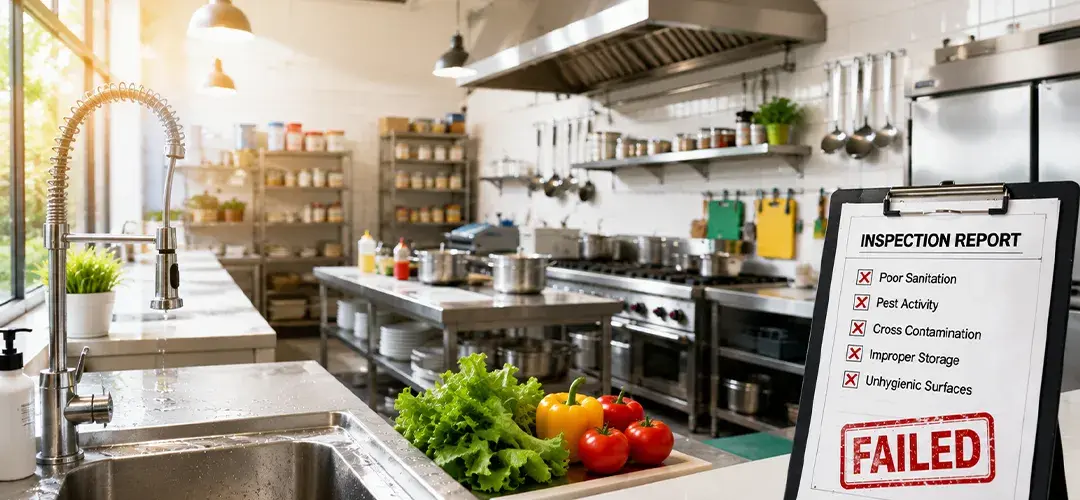
Every food service operator in India understands that poor hygiene has consequences — a regulatory action, a consumer complaint, a bad review. These are familiar risks, accepted as background noise in the operational environment.
What is far less common is a rigorous, line-by-line accounting of what poor hygiene actually costs — not just when a dramatic incident occurs, but as an ongoing operational drag affecting revenue, efficiency, workforce performance, and brand value every day.
The investment case for hygiene infrastructure looks very different when the cost of the alternative is properly understood.
The Gap
Most operators know a hygiene failure is expensive. Almost none have calculated how expensive. That gap is why hygiene infrastructure remains systematically underinvested across India’s food service sector.
DIRECT COSTS
Regulatory Penalties & Closure Costs
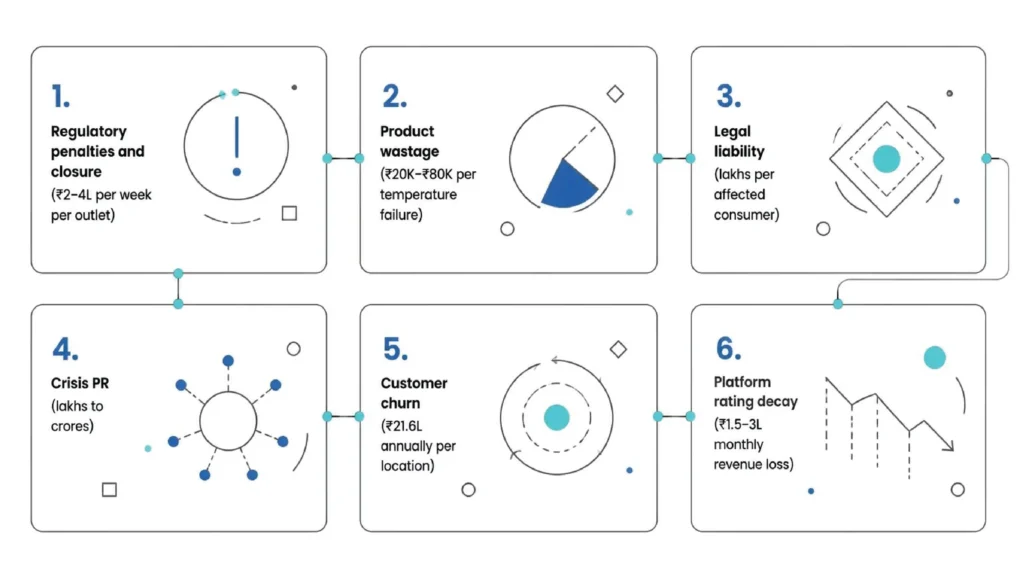
Under the Food Safety and Standards Act, 2006, the FSSAI and state authorities can impose penalties, suspend licences, and order temporary closures. For a QSR outlet generating ₹8–15 lakhs monthly, a one-week closure means ₹2–4 lakhs in lost revenue — plus fixed costs of rent, salaries, and overheads that continue regardless.
For a chain with multiple outlets, an enforcement action affecting several locations simultaneously multiplies these figures significantly. Regulatory actions, once recorded, also affect licence renewal and brand audit outcomes for years afterward.
DIRECT COSTS
Wastage, Legal Liability & Crisis PR
Product Wastage
A single temperature management failure requiring disposal of cold storage inventory can cost ₹20,000–₹80,000 in ingredients alone. Across a 50–100 outlet network, the aggregate annual cost is material.
Legal Liability
Under the Consumer Protection Act, 2019, a foodborne illness incident creates exposure to multiple compensation claims. Legal defence and compensation awards can run to lakhs per affected consumer — dwarfing annual monitoring costs.
Crisis PR Costs
When a hygiene incident goes public, crisis communications and reputation management can cost a few lakhs to several crores — yet these costs typically land in marketing budgets, obscuring the true cost of the hygiene failure.
HIDDEN COSTS
Silent Customer Attrition
A consumer who has a poor hygiene experience — or reads about one in a review — does not necessarily complain. They simply stop coming. The attrition is silent and invisible, but it is real.
In India’s delivery-first food environment, where the consumer’s relationship with a brand is mediated entirely through a platform and a phone, the trust signal from hygiene is particularly fragile.
0
%
Customer Loss
Typical return customer base lost after a hygiene incident
₹
0
L
Annual Revenue Erosion
From a single ₹12L/month location at 15% churn
HIDDEN COSTS
Platform Ratings & Delivery Revenue at Risk
India’s food delivery platforms — Zomato, Swiggy, and others — use rating and review data to determine algorithmic visibility. A hygiene incident that triggers negative reviews can reduce a restaurant’s average rating by 0.3 to 0.7 stars within days, reducing visibility, orders, and revenue.
For a cloud kitchen doing ₹10–20 lakhs monthly in delivery revenue, a sustained rating drop — from 4.2 to 3.7, for example — could reduce monthly revenue by ₹1.5–3 lakhs, month after month, long after the incident itself has been addressed.

HIDDEN COSTS
Staff Turnover & Operational Inefficiency
The Turnover Cost
Kitchen staff replacement costs ₹15,000–₹40,000 per hire when recruitment, onboarding, and lost productivity are accounted for. A kitchen replacing 8–10 staff annually due to poor hygiene culture incurs ₹1.2–4 lakhs per year — multiplied across a 50-location chain.
The Hidden Drag of Reactive Management
- Emergency deep cleans pulling kitchen teams off production during service hours
- Training resources deployed in emergency retraining rather than targeted development
- Leadership bandwidth diverted from strategic priorities to hygiene crises
- Supplier relationships strained by emergency procurement after contamination incidents
The Full Cost Picture
When all costs are aggregated — direct and hidden — the true financial impact of poor hygiene is far larger than any single incident report suggests.

THE ROI CASE
Building the Investment Case for Hygiene Infrastructure
Continuous hygiene intelligence is typically positioned as a compliance investment. That framing is accurate but incomplete — it undersells the financial case significantly.
-
Prevent Regulatory & Legal Costs
Identifying hygiene gaps before they accumulate into violations eliminates penalty, closure, and liability costs. -
Protect Platform Ratings & Delivery Revenue
Preventing hygiene failures that trigger negative reviews protects the delivery revenue stream central to QSR and cloud kitchen economics. -
Reduce Churn, Turnover & Operational Drag
Consistent hygiene standards protect customer lifetime value, reduce staff attrition, and shift management from reactive crisis response to proactive performance.
The Question Is Not Whether You Can Afford It
When the cost of hygiene infrastructure is set against the full cost of the alternative — customer churn, rating decay, staff turnover, operational inefficiency, and accumulated liability — the investment case is not marginal. It is clear.
The question for India’s food service operators is not whether they can afford to invest in hygiene monitoring and intelligence infrastructure. It is whether they can afford not to.
HygieneIQ provides continuous hygiene monitoring, operational intelligence, and performance-linked training infrastructure — shifting hygiene management from a reactive cost centre to a proactive investment in operational performance, brand protection, and revenue resilience.
Published by HygieneIQ | Enterprise Food Safety Intelligence
Share:
